THE MOUNTAIN WANTS TO FLOW
Propositions on the Himalayan Future
Curated by Avinam Manger and Sewon Rai
A mountain is never silent. Beneath its weight, rivers gather, memories circulate, and futures begin to shape. How do we look at these formations? The Mountain Wants to Flow brings together young artists from the Sikkim, Darjeeling, and Kalimpong regions to imagine the shared futures of the Himalaya. Moving beyond the mountain as scenery or symbol, the exhibition approaches it as a lived and contested terrain—shaped by inheritance, migration, development, ecological change, and acts of remembrance.
Through printmaking, painting, poetry, film, and murals, the participating artists trace the routes between generations, homelands, rivers, forests, roads, and imagined worlds. Their works ask whose knowledge is carried forward, who bears the costs of transformation, who is allowed to move, and who is held in place. They attend to what is etched into land and body, what is woven across generations, what is carried through displacement, and what might yet grow from uncertainty. The exhibition does not propose one Himalayan future. Instead, it gathers a set of propositions: plural, situated, relational, and unfinished. Here, the future is not any distant destination but something made in the hands that weave, the plates that are scraped, the smoke that rises, the homes that travel, and the rivers that refuse to be silenced.
The mountain wants to flow, not away from its roots, but toward futures that are plural, contested, and its own.
Gyani Pradhan Wong Ah Sui | KUNA | Lalit Thapa | Sai Priya Tamang | Samarpan Thapa | Suveksha Pradhan | Tika Maya Gurung
21-23 November 2026
As part of Shared Futures Conclave 2026 – Youth Edition
Venue: SC Bhawan, Top Floor
Participating artists;
Title: Moving Room
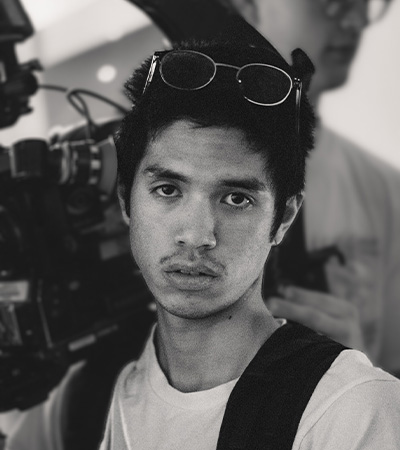
Bio: Gyani Pradhan Wong Ah Sui is a Mauritian-Sikkimese filmmaker, photographer, and visual artist based in Brooklyn, NY, working between New York and Sikkim, India. Their practice explores identity, memory, and belonging through the lens of diasporic experience, examining displacement, the making of new homes, and the cultures carried between them. Working with analog photography and experimental fiction film, they use abstraction, ritual, and the surreal to hold the fluidity of gender and cultural belonging. They are a 2026 Massachusetts Cultural Council Individual Artist Grant recipient. Their films have been screened at NFFTY, CineYouth, Red Dirt, and GRRL HAUS Cinema, where they received the New England Local Filmmaker Award and won Best Worcester County Short Film at the Massachusetts Independent Film Festival. Their photography has been exhibited at ArtsWorcester, A.P.E. Gallery, and the New Hampshire Art Association, with solo shows at Studio Tetteluna, Gangtok, and Harold Stevens Gallery, Worcester.
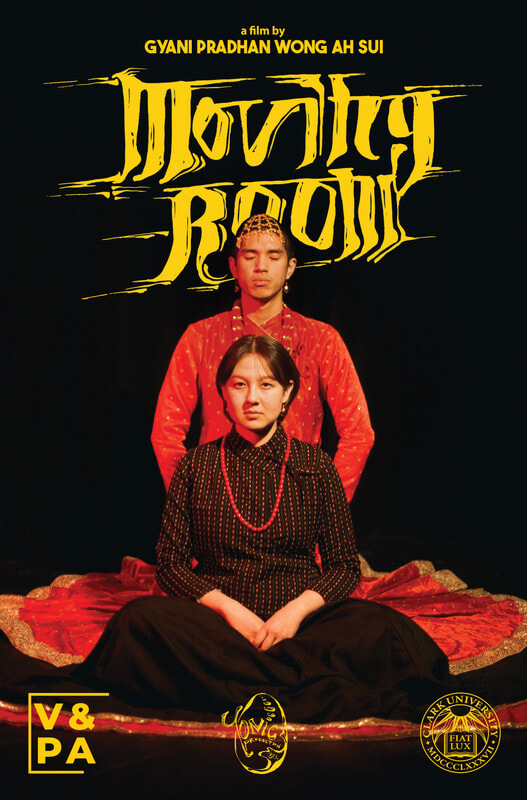
Artist note: Moving Room is a semi-autobiographical short film drawn from my teenage years in American suburbia. Karma, an international high school student from Sikkim, is stuck at home for the day with his host sibling, Alex. When Alex pressures him into smoking as they watch television, the two slip into a spiritual journey before things take a turn for the worse.
I left Sikkim at fifteen and moved between host families, sometimes packing my bags every month. I became a perpetual guest—learning to take up less space and quietly letting go of parts of myself to fit in. The film is set in a hybrid house-car: a home that never stays still and never quite belongs to Karma. In contrast, the spiritual realm belongs to him alone. There, he meets the Bodhisattva, a genderless figure in traditional Newari attire who carries ancestral wisdom and the possibility of freedom from the past. Abstract 16mm sequences interrupt the narrative at moments of heightened emotion.
Moving Room is an act of compassion toward my younger self and an offering to anyone who has had to carry home with them.

Title: Black, then Silver
Bio-Kuna is an interdisciplinary design collective based in Gangtok, made up of architects, designers, urban practitioners, and aspiring cartographers. Their work starts with a close reading of place, its terrain and climate, as well as its culture, memory, and everyday life, and their designs grow out of what that reading reveals. Mountain towns like Gangtok are changing fast, and much of what gets built now will be hard to undo. Kuna works to make that growth local, collaborative, and careful.
Artist note:
For decades, the Himalayas have absorbed the cost of growth that happens elsewhere. Rivers are dammed to light distant cities. Forests are cleared. Carbon released across the world returns here as heat, melting ice that took thousands of years to form. The people of these mountains did the least to cause this, and they feel it first. Each time the land changes, it finds a new use in someone else's economy. We are not entirely outside this story either. Himalayan towns have welcomed dams, roads and tourism for reasons of their own.
This mural speculates three moments in what may come next. It asks what adaptation means when the pressure never eases and who gets to decide what the mountains are for.
Title: Darjeeling and Me
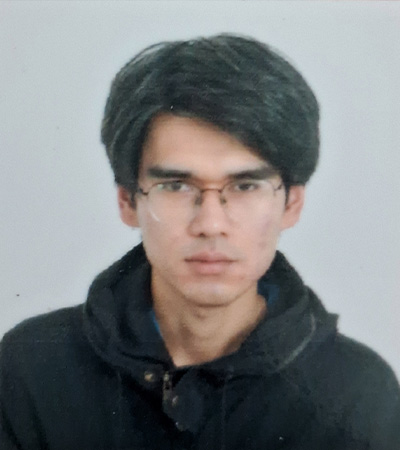
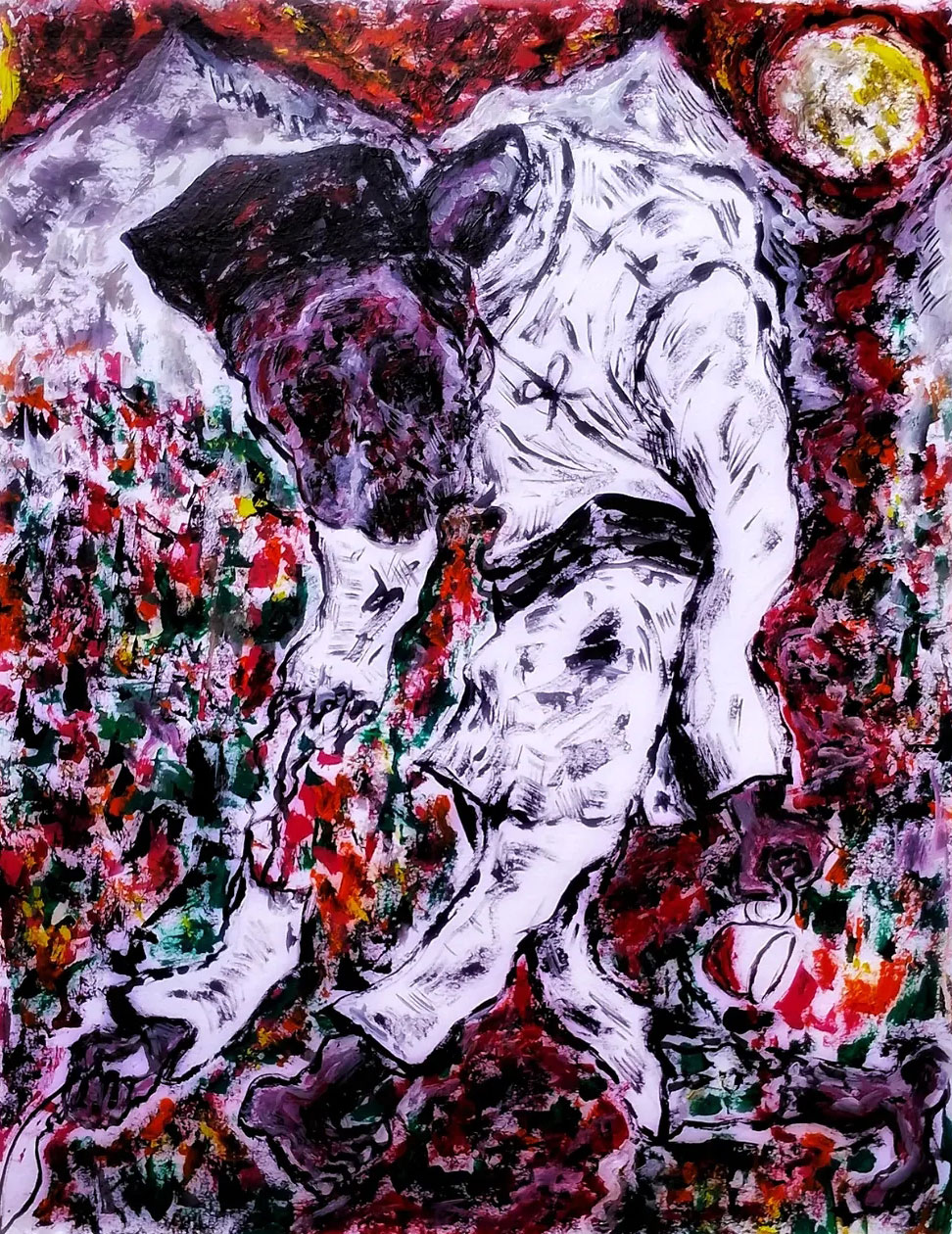
Bio: Lalit Thapa is an independent researcher and artist whose practice spans painting, sketching, and crayon-based work. His art explores the relationship between art and the material world, politics and ideology, and questions of identity. Moving away from realism, he often uses cartoonish and absurdist imagery to express lived experience. For Lalit, art is rooted less in technical mastery than in honest expression through painting, sketching, and writing.
Artist note: These artworks reflect my personal relationship with Darjeeling—its land, people, and the enduring sense of loss and displacement that has shaped my life. While the works emerge from my own experiences and consciousness of belonging, they also seek to represent a broader material and emotional reality felt by many from the region. Darjeeling appears here as a tapestry of natural landscapes, narrow roads, crowded towns, and surrounding villages, alongside a community negotiating its historical experiences, collective trauma, and identity within the larger idea of the nation. Through this work, I attempt to locate my own place within that landscape without allowing my individual sense of self to overshadow Darjeeling itself.
Title; अचल
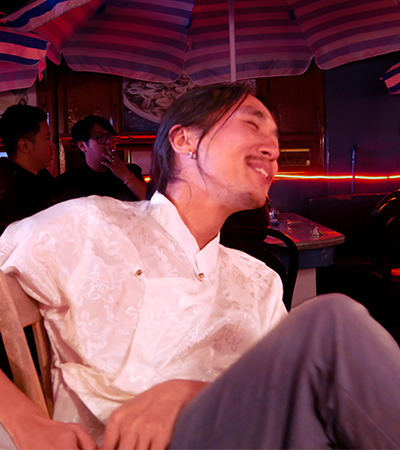
Bio—Sai Priya Tamang is a resident of Gangtok, Sikkim. His reflections involve motifs through which he conceals and expresses himself. He enjoys working with poetry, photography, music, and moving images. He has collaborated with regional storytellers as a writer, director, and assistant director on feature films and documentaries. Some of his work can be found on Instagram at @gingzerbear and on his blog, crayonsai.home.blog.
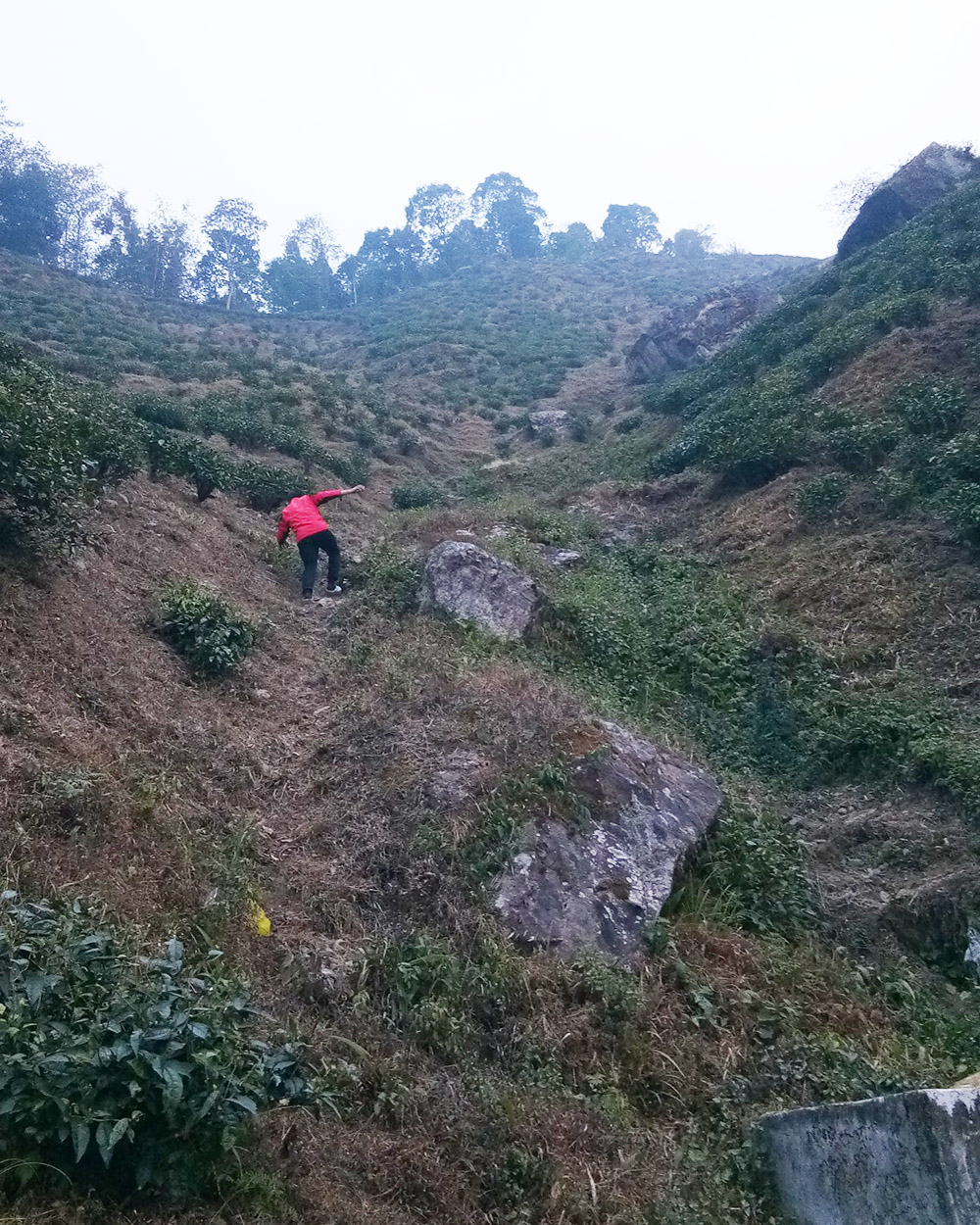
Artist note — अचल: I wrote this in the winter of 2021 during a stay at Marybong. One evening, when I wasn’t feeling particularly happy, I decided to go out for a walk. At some moment, my friend Kunal took a picture of me sizing up a hillside. To freeze that thought and feeling, I wrote this poem.
When the time came to give it a name, the word अनन्तशयन kept returning to me: Narayana resting upon a bed of serpents, immersed in a perfectly still ocean. But I couldn’t name this work अनन्तशयन, for the rest I had in mind wasn’t blissful. Mine was a rest that yearned desperately for movement. And the image was of a small, rocky rise on a lesser hill, yet one that seemed immovable.
Hence, अचल.
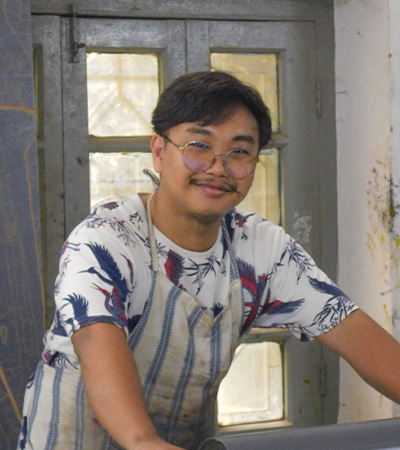
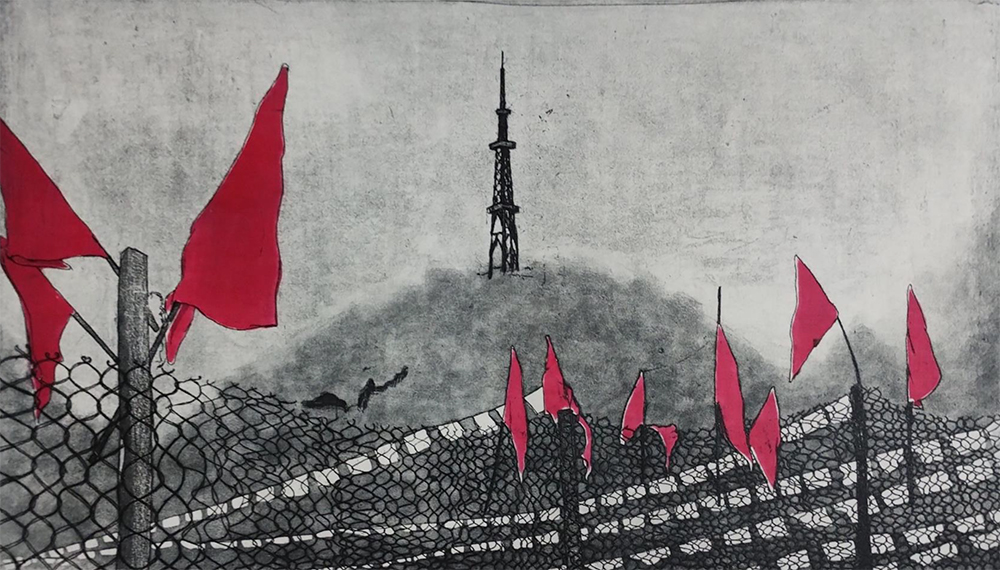
Bio: Samarpan Thapa is an emerging artist from Kurseong, Darjeeling, West Bengal. He holds a BFA from Visva-Bharati University and is completing his MVA at Rabindra Bharati University. Working primarily in etching, lithography, and woodcut, his practice explores landscape, identity, memory, and the socio-political realities of the Darjeeling hills. Rooted in his personal experience and the Gorkha community's cultural history, Thapa approaches landscape as a space shaped by belonging, historical memory, and transformation. His work examines the impact of colonialism, political struggle, and human intervention on land and people, using experimental printmaking to explore questions of identity, ownership, and belonging.
Artist note: My practice examines the relationship between landscape, memory, and ecology in the Darjeeling Himalayas. Rooted in the lived experiences of the Nepali community, it draws on oral histories, everyday practices, and local ecological knowledge to explore how place shapes identity and belonging. The work is informed by the enduring legacies of colonialism and the growing pressures of overtourism, both of which continue to reshape the region’s landscapes and communities. Through printmaking, I examine how histories become embedded in the land, from the commercialization of the Himalayan landscape and recurring water crises to the ecological impact of colonial forestry and the replacement of native broadleaf forests with pine plantations. These interconnected histories reveal the continuing link between environmental change and colonial systems of extraction. The material process of printmaking is central to this inquiry. The plate and paper become metaphors for how place and identity are inscribed over time. Through layering, repetition, and trace, each print records the imprints of history, ecology, and collective memory, positioning the landscape as both witness and archive.
Title: A feminist lens into the future
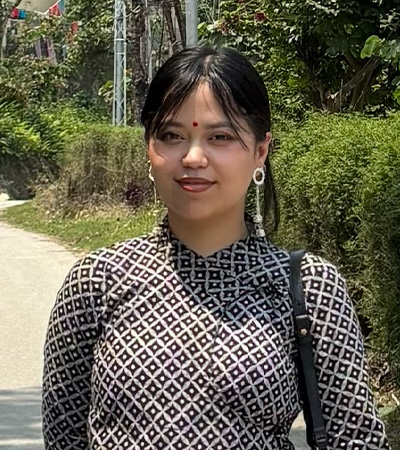
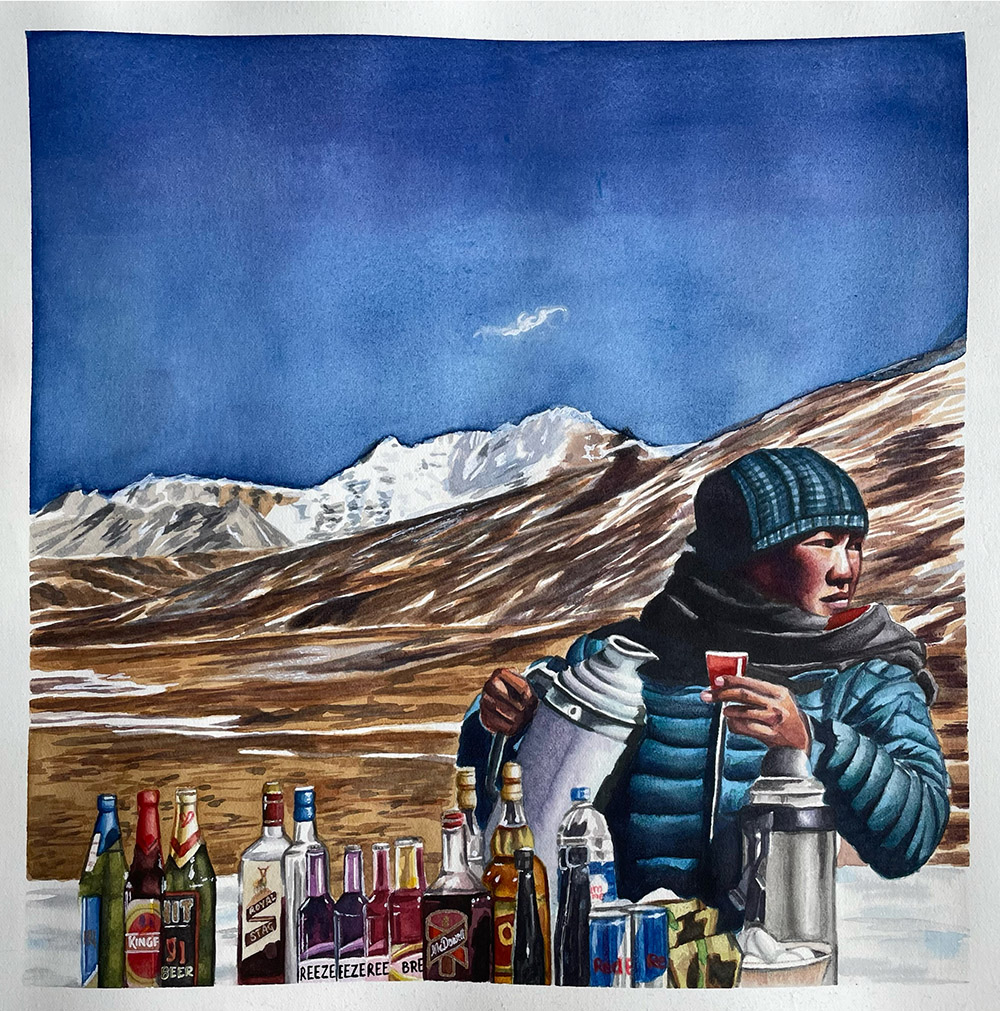
Bio- Suveksha Pradhan is a watercolor artist from Namchi who is trained in the Paubha style of Newar art from Kathmandu. She is interested in understanding the history of her people and the future they are choosing for themselves. She especially focuses on the lives of women around her and tries to present them in her artwork. In the constantly changing world of AI, she chooses to indulge herself in the process and focus on traditional methods so that our art forms do not die with us.
Artist note — Through my paintings, I weave together the past and the present so as to evoke a questioning of the future we are choosing for ourselves, especially as women. Where we and future generations end up depends on the choices we make in the present—no choice is independent of what came before—and thus our choices shouldn’t be mindless. That is what I present in my artworks: a chance to slow down and examine our reality as it is; a chance to change our trajectories while being conscious of the benefits and pitfalls that await us.
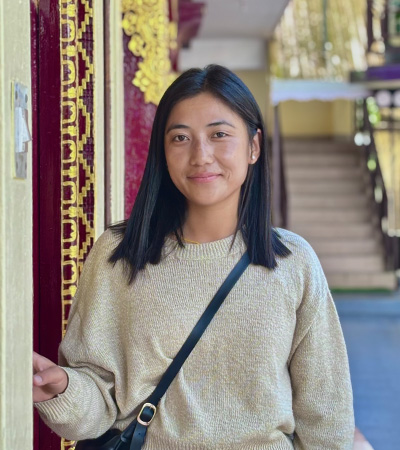
Bio: Tika Maya Gurung is an artist from Tikjeck, Gyalshing, West Sikkim. Since 2021, she has drawn inspiration from Sikkimese village life, ancestral traditions, and disappearing cultural practices.
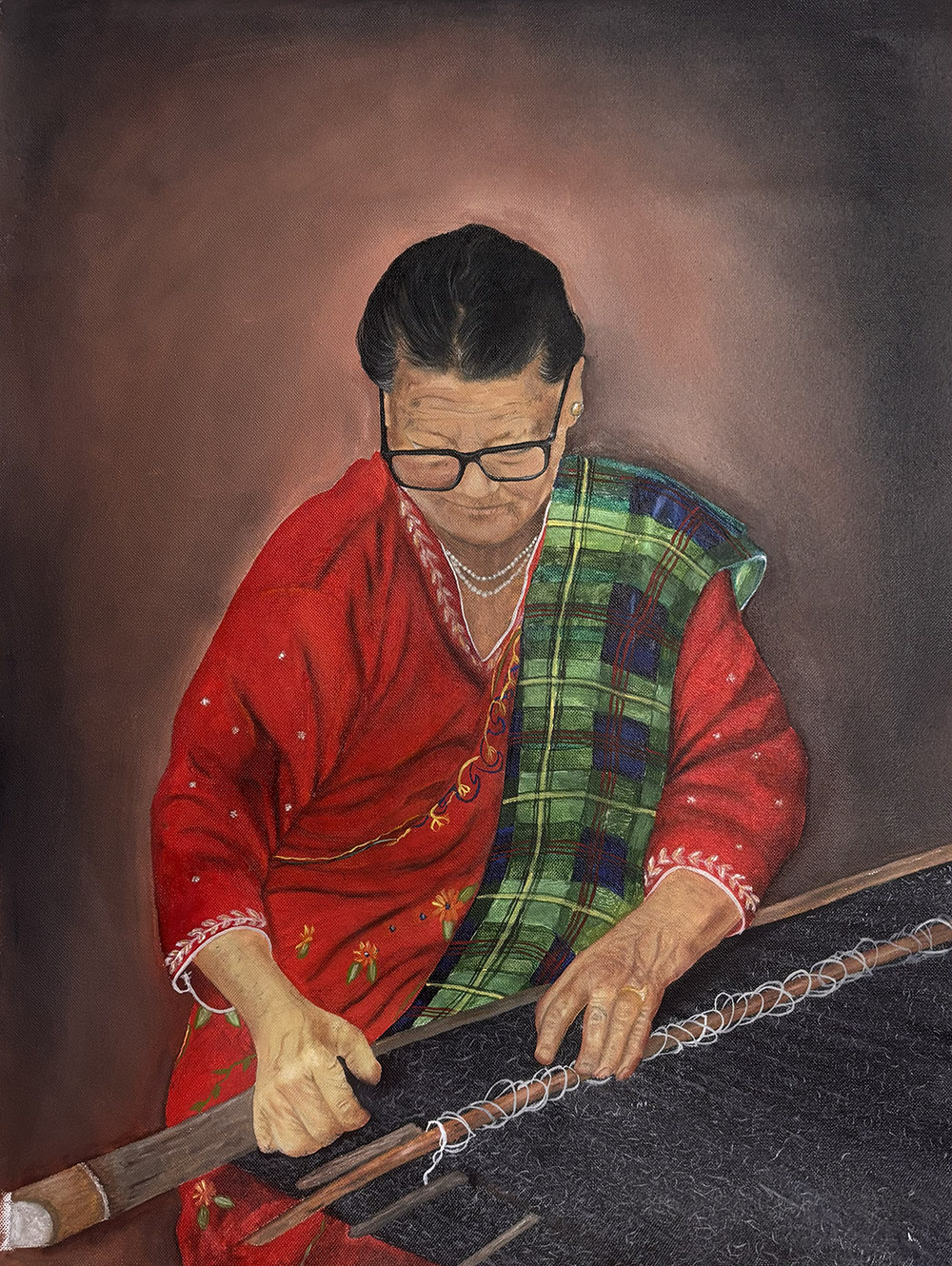
Artist note: My paintings explore the future as something deeply relational and rooted in place, memory, and cultural inheritance. In A Lifetime of Stories, an elderly man in traditional Dawra Suruwal and Dhaka topi becomes a carrier of lived experience. The radio, bamboo staff, and red-mud wall evoke a way of life shaped by community, knowledge, and the land, reminding us that the future is not made apart from the past but through the relationships between generations. Sacred Protection extends this idea through the ritual of burning incense. Its rising smoke becomes a metaphor for cultural memory, connecting people, place, belief, and generations as it carries purification and protection into the future. In Thread of Heritage, a woman weaving embodies traditional knowledge passed through hands, skill, and practice. Her work reflects the idea that the future is situated: it grows from the heritage, values, and lived experiences we choose to carry forward. Together, these works see tradition not as a relic of the past, but as a living thread that binds past, present, and future.